Table of Contents
ToggleGutters might not be glamorous, but they’re one of the hardest-working features of any Springfield home. When leaves, twigs, and debris clog them up, water backs up and runs over the sides, eventually finding its way into fascia, soffits, foundation cracks, and basement walls. The damage isn’t always visible at first, but by the time you notice water stains or soft spots in the eaves, the repair bill has ballooned. A regular gutter cleaning routine keeps water flowing where it should and stops expensive problems before they start. In this guide, we’ll walk through why Springfield gutters need attention, when to tackle the job, what tools you’ll need, and whether you should call in the pros.
Key Takeaways
- Regular springfield gutter cleaning prevents water damage to foundations, basements, and exterior walls by ensuring proper water drainage away from your home.
- Clean gutters twice yearly in fall and spring, with additional cleanings after heavy storms or if your property has many overhanging trees.
- Essential gutter cleaning tools include a sturdy ladder, work gloves, gutter scoop, bucket, and garden hose—always prioritize ladder safety and proper positioning.
- Check downspouts during cleaning to ensure water flows freely, and discharge water at least 4–6 feet from your foundation to prevent saturation.
- Call a professional for two- or three-story homes, heavily clogged gutters, sagging sections, or signs of structural damage rather than risk injury or further damage.
Why Regular Gutter Cleaning Matters in Springfield
Springfield’s climate, with its mix of spring thunderstorms, summer humidity, and fall leaves, creates ideal conditions for gutter problems. When gutters aren’t cleaned, debris accumulates fast, especially in mature neighborhoods with lots of trees.
Clogged gutters don’t just look bad. Water that can’t drain properly pools and becomes heavy, warping the gutter itself or pulling away from the fascia board. Standing water also becomes a breeding ground for mosquitoes and mold. Over time, overflow water cascades down the outside walls, saturates the soil around your foundation, and can seep into basements or crawlspaces. This often leads to foundation cracks, rot in wood framing, and mold growth, repairs that easily run into thousands of dollars.
Clean gutters direct water away from your home through downspouts and into drainage systems designed to handle it. That simple flow prevents the chain reaction of damage. Homeowners who maintain their gutters regularly add years to the life of their roofing, exterior walls, and foundation. It’s one of the cheapest preventive maintenance tasks you can do.
Best Time of Year to Clean Your Gutters
In Springfield, the best time to clean gutters is late fall, after leaves have dropped but before winter weather sets in. A second cleaning in spring, after heavy rains and before the dry season, catches any winter debris and ensures everything is flowing freely.
Fall cleaning is critical because leaf buildup is heaviest then, and you need clear gutters before winter freezes arrive. Ice dams form when clogged gutters trap water that freezes and blocks further drainage, a recipe for ice buildup under shingles. Spring cleaning picks up any debris that blew in over winter and confirms that nothing is loose or damaged from freeze-thaw cycles.
If your property has many trees directly overhead, you may need cleaning three or even four times per year. Pay attention after heavy storms, too. Falling branches and wind-blown debris can clog gutters overnight. Watching for signs, water spilling over the sides, visible debris, or sagging sections, tells you when an extra cleaning is needed between regular schedules.
Essential Tools and Materials You’ll Need
Before you climb up, gather everything you’ll need so you’re not running up and down the ladder. Here’s what to have on hand:
Tools:
- Sturdy ladder (20–24 feet, depending on roof height: aluminum is lighter, but fiberglass is more durable and doesn’t conduct electricity)
- Work gloves (leather or nitrile: gutters get sharp and grimy)
- Gutter scoop or small shovel (designed to fit inside gutter profile, or improvise with a plastic dustpan or small trowel)
- Bucket or bag for debris (hung from the ladder or held in one hand)
- Garden hose with spray nozzle or a small pump sprayer
- Roof harness or safety rope (optional but strongly recommended for steep roofs)
Materials:
- Gutter cleaning tablets or enzyme treatment (optional: helps break down organic buildup for stubborn cases)
- Splash guards or downspout strainers (to catch debris and reduce future clogs)
A simple hand-crank or powered wet/dry shop vac can speed up the job on gutters with thick sludge. Some homeowners use a pressure washer on low setting, but high pressure can damage gutters or shove debris into downspouts, so use caution.
DIY Gutter Cleaning: Step-by-Step Instructions
Safety First: Ladder Setup and Precautions
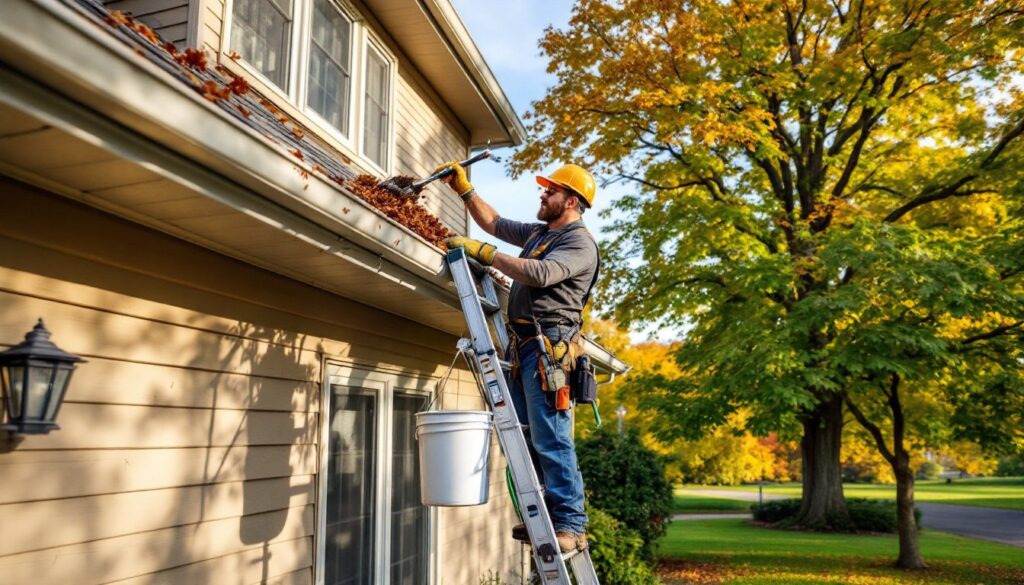
Proper ladder placement is non-negotiable. Set the ladder on flat, level ground, not on flower beds, mulch, or uneven terrain. The base should be one foot away from the house for every four feet of ladder height: a 20-foot ladder belongs about 5 feet out. Have a second person stabilize the ladder, or use a ladder stabilizer bar.
Wear safety glasses to protect eyes from debris, work gloves, and consider a dust mask if you’re sensitive to mold or mildew. Tie back long hair. Never lean more than an arm’s length to either side: reposition the ladder instead of overreaching. Avoid gutters in wet conditions or during storms. If your roof is steeply pitched, use a roof harness tethered to a secure anchor point, gutters aren’t designed to support body weight, and a fall from height is life-threatening.
Step-by-Step Process:
-
Scoop out debris. Start at one end (often near a downspout). Use your gutter scoop or shovel to scrape out leaves, dirt, and twigs. Work toward the downspout, depositing debris into your bucket or bag. Don’t force anything that feels stuck: work it loose gently to avoid damaging the gutter.
-
Check downspouts. Once the gutter is clear, trace the downspout. If water doesn’t flow freely when you run the hose into the opening, the downspout is clogged. Use a plumbing snake or high-pressure hose nozzle to clear it from the top, or disassemble the lower section if possible to dislodge the blockage.
-
Rinse thoroughly. Run water from your hose through the entire gutter length, starting from the highest point and working downward. Watch for pooling water, which indicates low spots or sagging. Water should flow smoothly toward the downspout exit.
-
Inspect for damage. While water is running, look for leaks in seams, rust spots, or sections pulling away from the fascia. Small leaks can be sealed with gutter sealant: larger damage may require a professional or section replacement.
-
Install or repair gutter guards. If you have gutter guards, clean underneath them and ensure they’re not blocked. If not, consider mesh or screen guards to reduce debris entry (though they’re not foolproof and still need occasional cleaning).
-
Check downspout exit. Make sure water is discharging at least 4–6 feet away from the foundation. Add an extension or drainage tube if needed to direct water into a proper drainage system.
When to Call a Professional Service
DIY gutter cleaning works well for single-story homes and homeowners comfortable on ladders. But some situations call for professional help.
If your home is two or three stories tall, scaling a ladder that high carries real risk, a fall from a second-story ladder is serious. The Occupational Safety and Health Administration (OSHA) doesn’t regulate homeowner projects the way it does commercial work, but the physics of falling from height doesn’t care: injuries happen fast. Many top gutter cleaning professionals in Springfield have insurance, equipment, and experience working at height safely.
Also consider calling a pro if gutters are heavily clogged with compacted sludge, if you spot sagging sections or separated seams, or if downspouts are rusted through. Trying to force a stuck downspout can puncture or crack it. Professionals have power tools and know-how to clear blockages without damage.
For cost estimates, platforms like HomeAdvisor allow you to compare local gutter cleaning services, read reviews, and understand typical pricing in your area. Many services offer annual maintenance plans at a lower per-visit cost. On home improvement websites like Bob Vila’s, you’ll find contractor-selection tips and advice on what questions to ask before hiring.
If structural issues surface, sagging gutters, foundation cracks, or signs of water damage in walls, that’s beyond cleaning and requires inspection by a licensed contractor or engineer.
Conclusion
Gutter cleaning isn’t the sexiest home improvement task, but it’s foundational to protecting everything else you invest in. Two or three hours twice a year, or a professional service, keeps water moving where it should and stops damage before it starts. If you’re confident on a ladder and your home is accessible, DIY works fine. If you’re unsure about ladder safety or have a high roof, the cost of hiring someone is money well spent. Either way, don’t let your gutters go unattended.