Table of Contents
ToggleA dishwasher works hard every day, but most homeowners don’t think about cleaning the machine itself. Food debris, mineral deposits, and grease buildup hide inside, in the spray arms, filter, and door seals, where they reduce cleaning power and create odors. The good news: deep-cleaning your dishwasher takes about an hour and requires only a few common household items. This guide walks you through the process step-by-step, so your dishwasher performs at peak efficiency and keeps your dishes spotless.
Key Takeaways
- Cleaning inside of dishwasher every 1–3 months prevents odors, mold growth, and restores peak cleaning power by removing food debris and mineral deposits.
- Use affordable household items like white vinegar and baking soda to deep-clean your dishwasher in about an hour—no expensive commercial cleaners needed.
- Remove and soak the racks, filter, and spray arms in soapy water, then run a hot vinegar cycle followed by a baking soda cycle to dissolve buildup and eliminate odors.
- Hard-to-reach areas like the door gasket, spray arm mounting points, and tub underside require manual scrubbing with a soft-bristled brush to remove trapped gunk.
- Monthly vinegar cycles and simple habits like rinsing dishes, leaving the door ajar, and using correct detergent amounts prevent buildup and extend your dishwasher’s lifespan.
Why Regular Dishwasher Cleaning Matters
A dishwasher’s job is to clean dishes, but that doesn’t mean it cleans itself. Over time, food particles, detergent residue, and hard-water minerals accumulate inside the tub, spray arms, and filter. This buildup reduces water flow and spray pressure, which means dishes don’t get as clean, even though the machine runs a full cycle.
Odors are another telltale sign. That musty or sour smell isn’t just unpleasant: it indicates bacterial and mold growth in damp crevices. Cleaning the interior every 1–3 months, depending on use, prevents these problems from getting worse and extends the machine’s lifespan. Think of it like changing your car’s oil: preventative maintenance costs time and pennies now, not hundreds later on a service call.
What You’ll Need To Get Started
Materials:
- White vinegar (distilled or cleaning-grade, 5% acidity)
- Baking soda (optional, for extra scrubbing power)
- Dish soap or mild detergent
- Soft-bristled brush or old toothbrush
- Small bowl or cup (glass or ceramic)
- Sponge or microfiber cloth
Optional tools:
- Rubber gloves (protects hands from water and debris)
- Small wire brush (for stubborn mineral deposits on spray arms)
- Flashlight (helps spot hidden buildup)
Don’t buy specialized dishwasher cleaners unless you prefer them. Vinegar and baking soda are cheap, effective, and less harsh than commercial products. They’re also safer if you have sensitive skin. Gather everything before you start so you’re not hunting for supplies mid-clean.
Step-By-Step Cleaning Process
Remove And Rinse The Racks And Filter
Start with an empty dishwasher. Pull out the bottom rack and locate the filter at the base of the tub, it looks like a cylindrical basket, usually with a handle or knob on top. Twist or lift it to remove it (your user manual shows the exact mechanism if you’re unsure). Rinse the filter under warm running water and scrub away any visible debris with a soft brush. A clogged filter is the #1 reason dishes don’t dry properly or smell bad.
Next, remove the top rack. Check the spray arms (the rotating arms with holes that spray water) for clogs. Hold each arm up to a light and look through the holes, they should be clear. If you see mineral buildup or food bits, use a small wire brush or straightened paperclip to poke through each hole. Rinse the arms under warm water. Now remove the bottom spray arm if your model has one. Don’t force anything: if a part feels stuck, consult your manual.
Set the racks, filter, and spray arms aside in a bathtub or sink filled with warm water and a splash of dish soap. Let them soak for 15–20 minutes while you tackle the tub.
Run A Vinegar Cycle
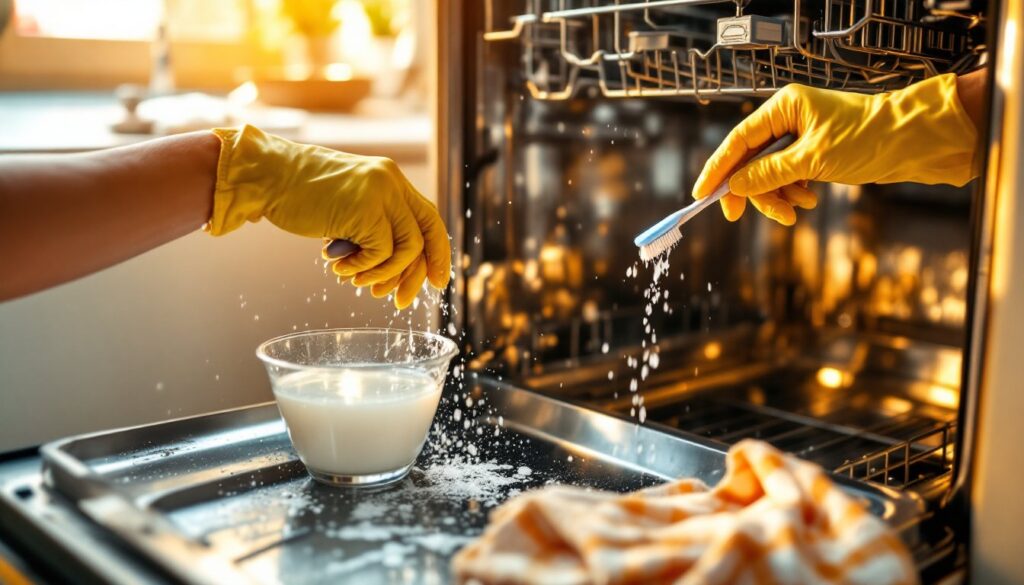
Place a cup or bowl filled with white vinegar on the top rack of the empty dishwasher (not the tub floor, where it could run out). Close the door and run a hot-water cycle (usually the longest, hottest cycle available, often labeled “pots and pans” or “heavy wash”). The vinegar will circulate through the spray arms and dissolve mineral deposits and grease buildup inside.
When the cycle finishes, open the door and let it air-dry for a few minutes. The smell of vinegar should be noticeably less strong than the smell you detected before. This is working. Now sprinkle baking soda across the tub floor and run a short hot-water cycle (no vinegar this time). Baking soda absorbs remaining odors and provides gentle abrasive action on stubborn spots.
Cleaning Hard-To-Reach Areas
The corners, door seal, and underside of the tub collect gunk that cycles alone won’t reach. Wipe the rubber gasket (door seal) with a damp cloth, paying attention to the crevices. Food and soap scum hide there and cause leaks. If you see dark spots that won’t come off, that’s mold, spray with a 1:1 vinegar-and-water solution and let it sit for 10 minutes, then scrub gently.
Use a small soft-bristled brush (an old toothbrush works perfectly) to scrub around the spray arm mounting points, the sides of the tub, and the underside of the door. These areas trap buildup where spray pressure can’t reach. Work in small circles and don’t rush: you’re breaking up deposits, not stripping enamel.
For the door interior (the facing you see when it’s open), spray with a 1:1 vinegar-and-water mixture and let it sit for 5 minutes, then wipe with a damp cloth. Dry with a microfiber cloth to avoid water spots. The Kitchn’s kitchen guides offer additional detail on appliance care if you want deeper dives into specific issues. Finally, rinse and dry all the removed parts (racks, filter, spray arms) and reinstall them carefully, making sure spray arms rotate freely.
Preventative Maintenance Tips
A few simple habits keep your dishwasher running well between deep cleans. First, rinse dishes before loading if you live in a hard-water area or run cycles with long gaps between loads. Dried, baked-on food accelerates buildup. You don’t need to hand-wash, a quick rinse under cold water removes large particles.
Second, run a vinegar cycle monthly if you wash dishes daily, or every other month if you use the dishwasher a few times a week. This takes five minutes of your time (the machine does the work) and prevents mineral and grease from accumulating. According to cleaning best practices, regular vinegar treatments are one of the most effective preventative measures.
Third, leave the door ajar after a cycle finishes, even just cracking it open for 30 minutes lets moisture escape and discourages mold growth. Finally, use the correct amount of detergent. Too much leaves residue: too little leaves food residue on dishes, which then clogs the filter. Check your manual or the detergent bottle for dosage based on water hardness.
If your area has very hard water, consider installing a water softening filter in your kitchen or using rinse aid (a liquid that helps water drain from dishes and the tub interior). Hard water is a leading cause of mineral buildup, and a small investment here pays off in appliance longevity.