Table of Contents
ToggleA slow or sluggish drain doesn’t always mean calling a plumber, and it definitely doesn’t mean reaching for harsh chemical cleaners. One of the easiest, cheapest, and most effective ways to clear minor drain clogs is using two household staples: baking soda and vinegar. This simple method works because of basic chemistry: when these two ingredients meet, they create a fizzing reaction that breaks down organic buildup, hair, grease, and soap scum without damaging your pipes. Whether you’re dealing with a kitchen sink or bathroom drain, this budget-friendly approach takes about 30 minutes, costs under $5, and uses ingredients you likely already have at home. Let’s walk through exactly how to clean your sink drain using these powerhouse pantry items.
Key Takeaways
- Cleaning sink drain with baking soda and vinegar uses a simple chemical reaction that breaks down organic buildup, hair, and grease without damaging pipes or the environment.
- The fizzing action between baking soda and vinegar works best for slow drains and minor clogs, not severe blockages, and takes about 30 minutes for under $5 using household staples.
- Prepare your drain by removing visible debris and pouring hot water down first, then add baking soda followed by vinegar, cover the drain for 15–30 minutes, and flush with remaining hot water.
- Monthly boiling water treatments and bi-monthly full baking soda and vinegar cleanings prevent most drain problems and cost significantly less than emergency plumber calls.
- Drain maintenance habits like using screens to catch hair, wiping grease before washing, and avoiding pouring oils down the sink extend time between cleanings and keep drains flowing smoothly.
Why Baking Soda And Vinegar Work For Drain Cleaning
Understanding how this method works helps you use it effectively and recognize its limitations. Baking soda (sodium bicarbonate) is a mild alkaline compound that loosens debris and neutralizes odors. Vinegar (acetic acid) is acidic and reacts with baking soda to produce carbon dioxide gas, those satisfying bubbles you’ll see.
When the two combine inside your drain, the fizzing action mechanically dislodges hair, grease, soap scum, and mineral deposits clinging to pipe walls. This reaction is strong enough to break apart minor clogs but gentle enough to use regularly without corroding PVC, copper, or cast-iron pipes.
That said, this method works best for slow drains or minor buildup, not severe blockages caused by large obstructions or tree roots. For stubborn clogs, you may need a plumbing snake or professional help. Hot water amplifies the effect because it softens grease, so heating your vinegar before use boosts cleaning power. Think of it as a preventative maintenance tool and a gentle first-line solution, not a drain-busting miracle cure.
What You’ll Need Before Getting Started
The beauty of this project is simplicity. Here’s what to gather:
Materials:
• Baking soda – ½ cup (standard box from any grocery store)
• White vinegar – 1 cup (distilled or regular)
• Hot water – a kettle or pot
• Optional: dish soap, lemon juice, or essential oils for scent
Tools:
• Flashlight – to see inside the drain
• Plunger – a cup-style plunger for sinks (different from a toilet plunger)
• Drain plug or stopper – if your sink has one
• Small brush or old toothbrush – to scrub the drain opening
• Bucket – to catch water if needed
Safety & PPE:
• Gloves – not strictly necessary, but they keep your hands cleaner
• Eye protection – optional, but wear safety glasses if you’re sensitive to splashing vinegar
No special tools required. Most households have these items already. If you don’t have a plunger, a simple rubber cup plunger works fine: avoid accordion-style plungers, which don’t seal as well on flat sink surfaces.
Step-By-Step Instructions For Cleaning Your Drain
Clearing Surface Debris And Preparing The Drain
Start by removing any visible blockage in and around the drain opening. Pull out loose hair, dental floss, or soap buildup with your fingers or a small brush. Use a flashlight to peer inside and see what’s there, most drains collect a fuzzy layer of soap scum and hair buildup that’s easy to spot.
Next, boil a kettle of water (about 2–3 cups). Pour roughly half of the hot water slowly down the drain to soften any grease and rinse loose debris deeper into the pipe. Let it sit for 2–3 minutes. This prep step matters: it makes the baking soda and vinegar combo work more effectively. Avoid plugging the drain during this step, let water flow freely.
Adding Baking Soda And Creating The Fizzing Reaction
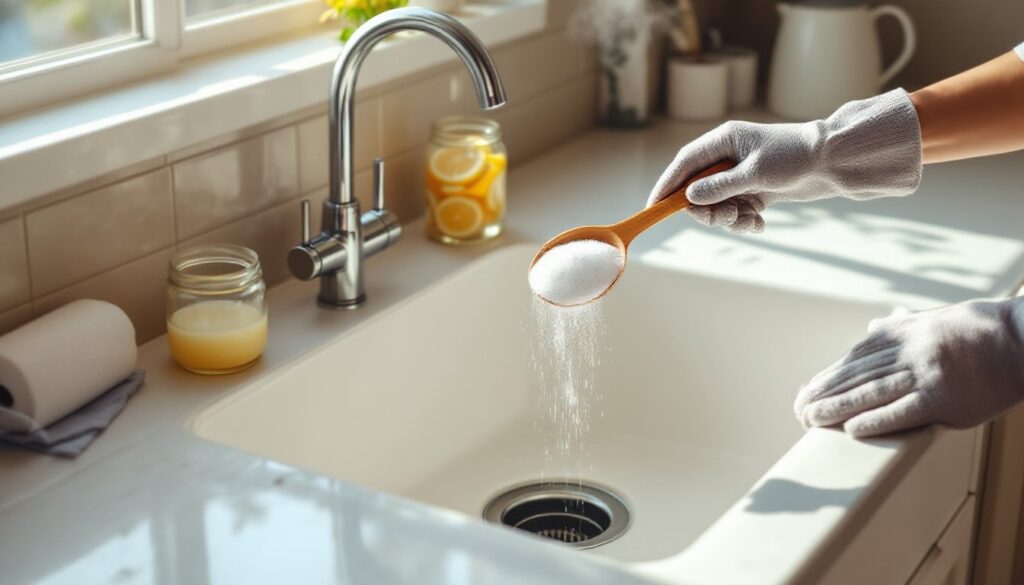
Once the hot water has drained, pour ½ cup of baking soda directly into the drain opening. Use a funnel if you have one to avoid spilling. Follow immediately with 1 cup of white vinegar (you can warm it slightly for extra power, but room-temperature vinegar works fine). The moment vinegar hits baking soda, you’ll hear a fizzing sound and see foam rising in the drain, that’s the chemical reaction doing its job.
Quickly cover the drain with the stopper or a wet cloth to trap the fizz inside the pipe. The bubbling action travels down the drain and dislodges buildup along the pipe walls. Let it sit for 15–30 minutes (longer is okay, but 15 minutes is usually sufficient). Resist the urge to peek or disturb it: the reaction works best when contained.
Flushing And Testing Your Results
After the fizz has settled (you won’t hear much bubbling anymore), remove the drain cover and pour the remaining hot water (the second half of your kettle) down the drain slowly. This final flush washes away loosened debris and baking soda residue. Listen and feel the water flow, it should move faster than before if the cleaning worked.
Run water for 30 seconds while holding your nose over the drain opening. A cleared drain should smell fresh or neutral: a lingering foul odor suggests deeper buildup. If water still drains slowly, repeat the process once more. Severe clogs may require a plumbing snake or a call to a professional.
For extra freshness, add 5–10 drops of lemon essential oil or a small handful of baking soda mixed with water before your final rinse. This leaves a clean scent without harsh chemicals. Some folks also add a splash of dish soap before flushing, which helps break down greasy residue.
Tips For Maintaining A Fresh, Flowing Drain
A healthy drain stays clear with simple, regular maintenance. Once a month, pour boiling water down your drain to dissolve accumulated grease, no baking soda or vinegar needed for this quick step. This single habit prevents most slow-drain problems before they start.
Every 2–3 months, repeat the full baking soda and vinegar treatment as a preventative flush. It costs pennies and takes 30 minutes, making it far cheaper than a plumber visit. Homeowners managing home drain cleaning as part of their routine maintenance avoid expensive emergency calls.
Prevent clogs by using drain covers or screens to catch hair and debris before they enter the pipe. In the kitchen, wipe grease off pans with a paper towel before washing: don’t pour bacon fat or cooking oil down the sink. These habits extend the time between cleanings dramatically.
If you have older cast-iron drains or septic systems, this method is ideal because it’s completely safe and eco-friendly. Unlike commercial drain cleaners, baking soda and vinegar won’t harm beneficial bacteria in septic tanks. For additional cleaning hacks and maintenance strategies, resources like Real Simple and The Spruce offer excellent guides on home maintenance and cleaning. Keep your drains flowing smoothly by staying consistent with these small, preventative steps rather than waiting for a crisis.